
The Philosophical Shepherd No. 1
- Katherine Henderson
- Feb 22
- 3 min read
Walking, Trust, and Thinking About the Future
Walking together is one of the most natural ways humans build trust.
Side by side, there is no podium and no audience. The pace is shared. Silence is allowed. Conversation appears when it is ready — and just as easily drifts away again.
Here in the mountains, many of our walks unfold this way. People arrive expecting scenery and movement, and often leave having spoken about things they did not plan to discuss at all: life, work, children, uncertainty, hope, and the future.
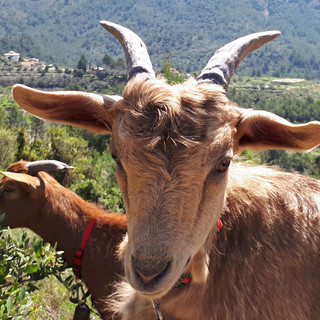
The goats help.
They are calm, responsive herd animals, and their presence establishes a shared rhythm. People slow down without being told to. Groups settle naturally into cohesion. Even children — especially children — relax into the moment. Many of our guests bring their grandchildren on these walks specifically to offer them time without screens, pressure, or constant instruction.
It is in this spirit that we are beginning an occasional series of reflections called
The Philosophical Shepherd.
These are not lessons.
They are not arguments.
They are simply thoughts that arise while walking.

A Conversation on the Path
On a recent walk, a guest and I found ourselves talking about artificial intelligence.
Like many people, they admitted they use AI regularly — for work, for writing, for organising ideas. They also admitted to feeling uneasy about it. Not because they fear technology itself, but because they have heard concerns about energy use, water consumption, and scale.
“I feel conflicted,” they said. “I use it, I value it — but I worry about the cost.”
This is a very modern kind of discomfort.
As we walked, we spoke about how most technologies feel abstract until they suddenly don’t. Electricity is invisible until the power goes out. Water feels limitless until a drought arrives. Trust erodes when systems grow so large that no one can quite see how they work.
Walking allows these conversations to unfold gently. No one needs to be certain. No one needs to persuade.

Trust, Not Guilt
What emerged was not a call for people to be better, more disciplined, or more virtuous.
Quite the opposite.
Most people already care deeply. They recycle. They conserve water. They think about the future their children and grandchildren will inherit. The problem is not individual behaviour — it is systems that place too much responsibility on individual conscience.
When responsibility is invisible, people either disengage or carry a quiet sense of guilt. Neither leads to good outcomes.
But when systems are structured honestly, something interesting happens.
Think of:
fire bans in summer
water restrictions during drought
fishing seasons that protect future stocks
People do not resent these when they are consistent, fairly enforced, and clearly tied to reality. In those cases, guidance feels less like control and more like weather advice — something to adapt to rather than argue with.
Trust shifts from belief to infrastructure.

A Thought About the Future
As the path climbed, the conversation drifted toward what the future might look like.
What if intelligence became more local again?
What if communities — or even individual homes — one day hosted small, local data centres, just as many now have solar panels and batteries? Local energy. Local responsibility. Clear limits. Clear accountability.
Not a return to medieval times — but a future where decision-making and food production become more local and resilient, while communication, shared knowledge, and creativity continue to flow globally through the digital world.
In such a future, legislation would not feel like restriction. It would feel like support — a way of freeing people to behave responsibly without constant vigilance or anxiety.
Ordinary goodness would be enough.

Walking On
Plato never trusted solitary intelligence. His philosophy lived in dialogue — because truth, for him, was not stored inside a single mind. It was revealed between minds.
Perhaps that is why walking conversations endure.
They remind us that thinking does not always require a desk, a screen, or certainty. Sometimes it only requires a shared path, a steady pace, and the willingness to wonder aloud.
We will leave the rest of this thought for another walk.


Comments