top of page
Cloudy skies 14.jpg

Not all outdoor experiences are about activity, distance, or achievement.

Some are about slowing down.

Many visitors to the Costa Blanca now find themselves searching for something quieter — a way to step away from busy environments and reconnect with nature in a more gentle, human way. Many people describe walking with goats as a calm, mindful experience, even though it is not structured as a formal practice.

This is where calming animal companion walks begin to make sense.


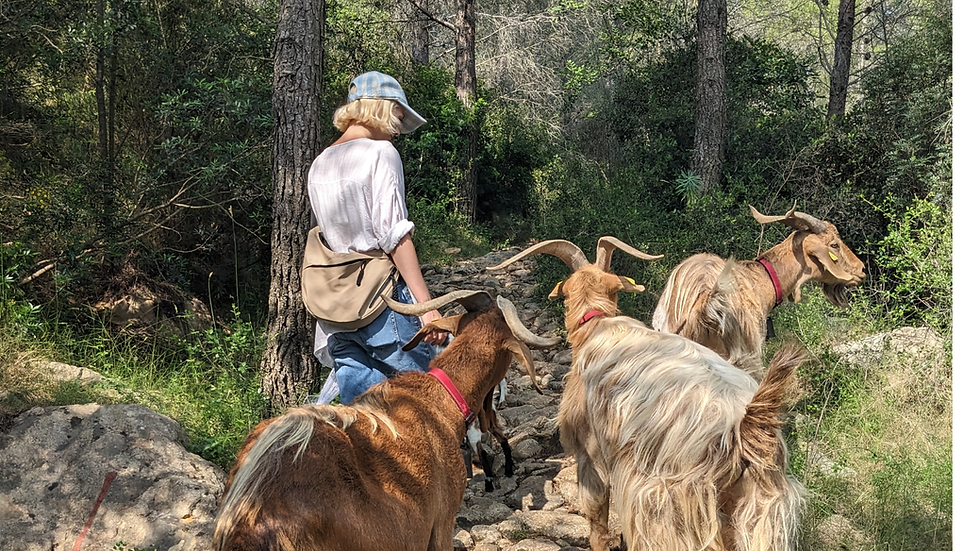
A young woman is walking calmly through a forest accompanied by three male goats.
Meandering is one of life´s best activities

What are calming animal companion walks in Costa Blanca?

Calming animal companion walks in Costa Blanca are gentle, nature-based experiences where visitors walk alongside animals — such as goats — through quiet landscapes. These walks focus on slow movement, observation, and connection with both the animals and the surrounding environment.

In areas such as the mountains near Tàrbena, these experiences offer a peaceful alternative to more structured or crowded tourist activities.

Many visitors now find us while searching for alternative activities to busy tourist attractions in Costa Blanca.


A group of visitors explore the valleys and forests surrounding Tarbena, Costa Blanca.

Walking with goats: a naturally calming experience

Walking with goats is not like a typical guided walk.

The goats are not led.

They move freely, pausing, browsing, and choosing their own path through the landscape.

This changes everything.

The pace slows. The attention shifts. People begin to notice more — the sound of bells, the movement of the herd, the shape of the terrain.

For many visitors, this creates a calm, grounding experience that feels very different from more structured activities.


Walking with goats as a mindful experience

Many visitors don’t arrive looking specifically for a “mindfulness experience.”

But during the walk, something shifts.

The steady rhythm of the goats, the quiet movement through the landscape, and the absence of pressure or structure naturally bring attention into the present moment.

In recent months, we’ve welcomed visitors attending yoga retreats and mindfulness training in the Costa Blanca. Some have described the experience as deeply aligned with their practice — not because it is guided, but because it allows space for awareness to emerge naturally.

This is not a formal mindfulness session.

It is something simpler — and perhaps more powerful.

A shared movement through the landscape, where attention settles without being forced.


Why walking with animals has a calming effect

There are several reasons why animal companion walks feel so different:

• The pace is not controlled by people

• The presence of animals encourages quiet observation

• Movement becomes slower and more natural

• The focus shifts away from goals and towards experience

Walking alongside animals creates a shared rhythm — one that is often described as calming, grounding, and quietly restorative.


A Mindfulness experience Costa Blanca.

The mountains of Tàrbena

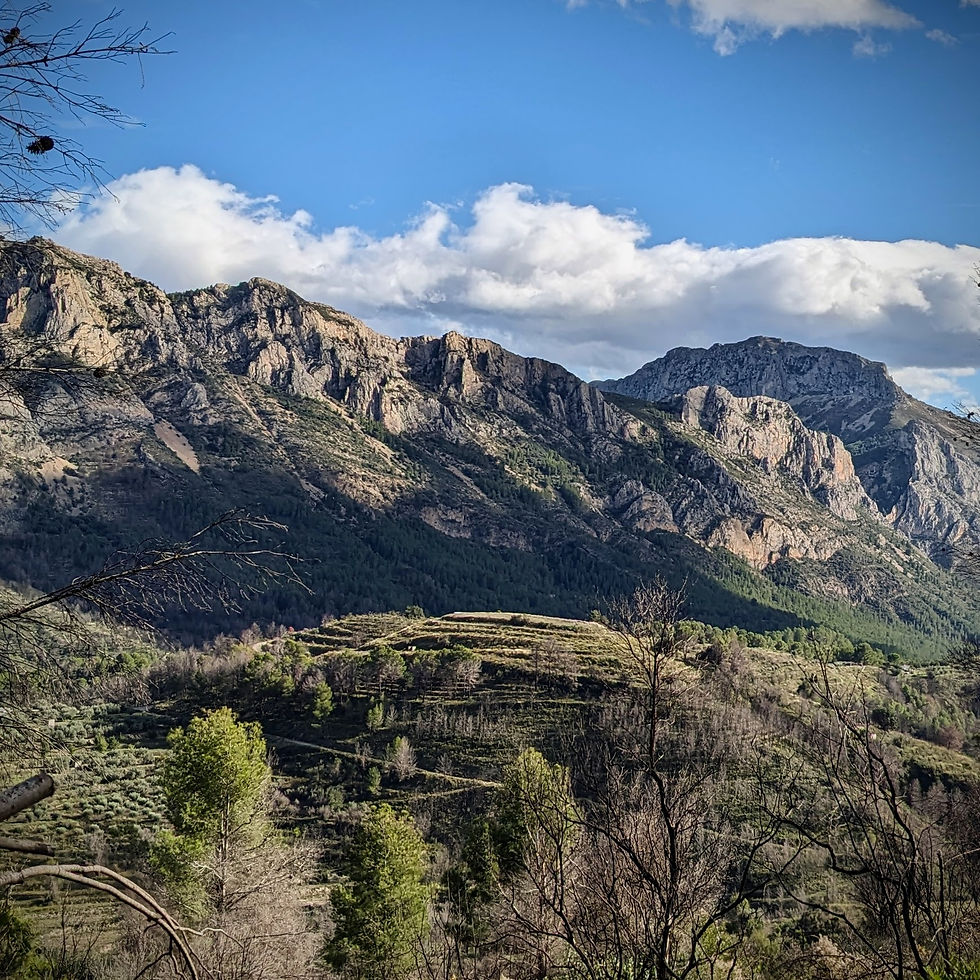
In the inland mountains of the Costa Blanca, around the village of Tàrbena, these experiences take place in a landscape shaped by terraces, woodland paths, and open valley views.

It is a setting that naturally supports slower movement and quiet attention.

Away from the coast, the atmosphere changes.

And with it, the experience of walking changes too.


Tarbena, set in the Marinas Bajas
Tarbena, a beautiful mountain village, Costa Blanca

Who chooses this kind of experience?

Calming animal companion walks often appeal to:

• families with young children

• couples looking for a quieter experience

• solo travellers seeking something reflective

• visitors who feel overwhelmed by busy environments


Increasingly, they are also discovered by travellers searching for:

👉 “non-touristy activities”

👉 “calming outdoor experiences”

👉 “things to do with children in Costa Blanca”


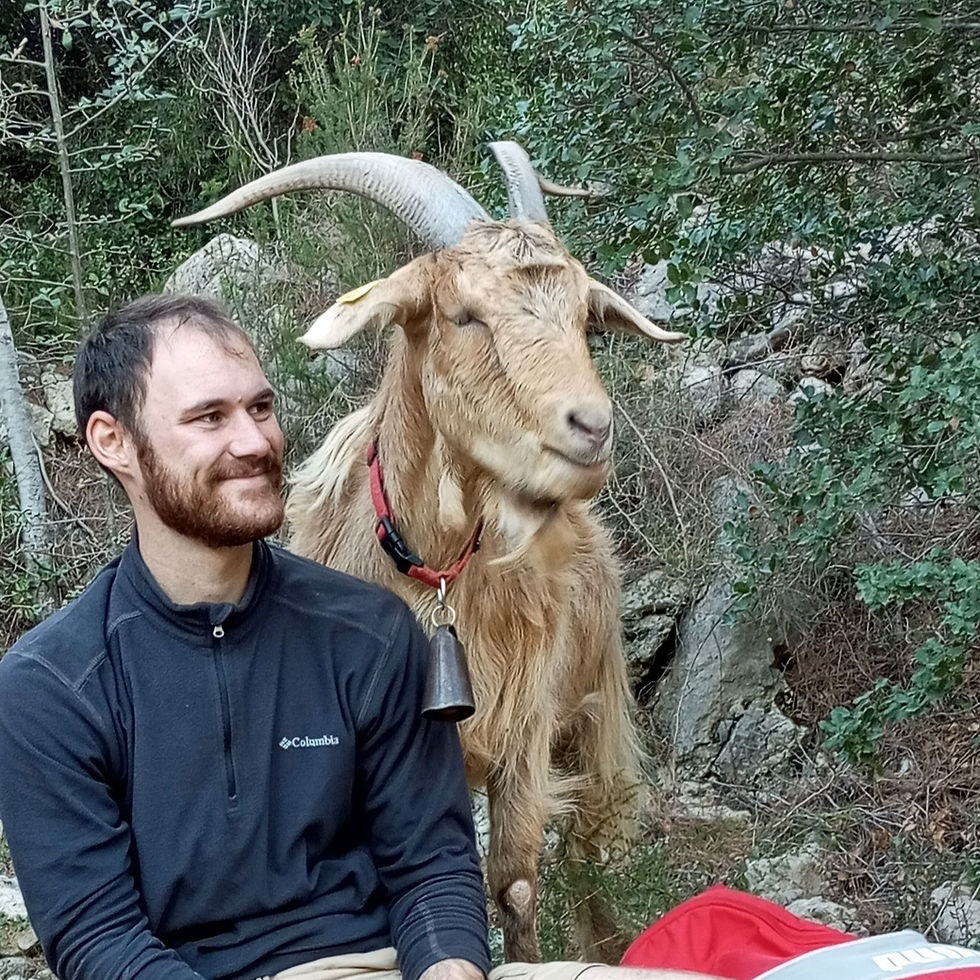
A comical image of a young man sitting next to a larger male goat.

A different way to experience Costa Blanca

These walks are not about covering distance or reaching a destination.

They are about:

• walking alongside animals

• sharing the landscape

• noticing more

• moving at a human pace

In a fast-moving world, this kind of experience feels quietly radical.


FAQs

What is an animal companion walk?

An animal companion walk is an experience where people walk alongside animals in a natural environment, focusing on connection, observation, and shared movement rather than structured activity.

Are calming walks suitable for children?

Yes. These experiences are often particularly suitable for children, as they combine gentle movement, animals, and outdoor exploration.

Where can I find calming outdoor experiences in Costa Blanca?

Inland areas such as the mountains near Tàrbena offer quieter, nature-based activities away from busy coastal tourism.

Is walking with goats relaxing?

Many visitors describe it as calming and grounding, due to the slow pace, natural surroundings, and presence of the animals.


What are alternative activities to busy tourist attractions in Costa Blanca?

Alternative activities include:

• walking in the inland mountains

• visiting traditional villages such as Tàrbena and Jalón

• exploring local markets and bodegas

• nature-based experiences such as goat trekking

• quiet coastal visits outside peak times

These options offer a slower, more authentic way to experience Costa Blanca.


Many visitors come to the Costa Blanca expecting beaches, resorts, and busy tourist attractions.

But not everyone is looking for crowds.

If you’ve found yourself searching for alternative activities to busy tourist attractions in Costa Blanca, you’re not alone. More travellers are now choosing quieter, more meaningful ways to experience the region — away from the busiest places.

The good news is that this side of the Costa Blanca already exists.

You just have to step slightly inland.

Many visitors now find us while searching for alternative activities to busy tourist attractions in Costa Blanca.


Visitors enjoy a rare moment, a coffee in a beautiful mountain village after a memorable walk.

What are alternative activities to busy tourist attractions in Costa Blanca?

Alternative activities in Costa Blanca include quieter inland experiences such as mountain walking, visiting traditional villages, exploring local markets, nature-based activities, and small guided experiences like goat trekking in the mountains near Tàrbena.

These options offer a slower, more authentic way to experience the region, away from crowded coastal resorts and high-traffic attractions.


1. Walking with goats in the mountains of Tàrbena

One of the most unusual alternatives to typical tourist activities in Costa Blanca is walking with a herd of goats in the mountains near Tàrbena.

These are not traditional tours. The goats move freely through terraces, woodland edges, and open mountain paths, setting a natural pace that encourages visitors to slow down.

It’s a quieter, more immersive experience — one that feels very different from busy attractions.


A traveller reaches the summit of a mountain in Costa Blanca accompanied by three large male goats

Watch a quiet moment from one of our walks


Or experience a short moment from the path


These short films show how the experience unfolds naturally — with the goats setting the pace, and each walk shaped by the people and the landscape.

No two walks are the same, but the rhythm is always quiet and shared.

We’ve also begun documenting these walks on YouTube, offering a visual glimpse into goat trekking in Tàrbena and the wider Costa Blanca landscape.


2. Markets and wine in Jalón (Xaló)

The village of Jalón offers one of the most authentic alternatives to crowded tourist areas.


Jalon (Xalo), Saturday market, every week of the year

Its weekly market combines antiques, local produce, and a relaxed, social atmosphere. The surrounding valley is also home to several bodegas, where visitors can taste local wines at an unhurried pace.


The Cooperative Bodega in Jalon (Xalo)

3. Exploring Polop and the inland landscape

Polop provides access to a quieter side of Costa Blanca life, where traditional village streets meet walking routes, climbing areas, and natural terrain.

It’s a place where visitors can explore without the pressure of busy attractions.


The village of Polop de la Marina is a hidden gem, 13 km inland from Benidorm.

4. Mountain walking and quiet trails

The inland mountains of the Costa Blanca offer a network of paths through terraces, forests, and valleys.

Walking here feels different from organised tourism — it is slower, less structured, and more connected to the land.


A traveller, looks down from the mountains inland from Calpe

5. Quiet coastal alternatives

Even along the coast, it’s possible to find quieter moments.

Early mornings, lesser-known coves, and off-peak visits allow you to experience the Mediterranean without the crowds.


A beautiful costal path between Calpe and Benissa.

Why these alternatives feel different

Alternative activities are not necessarily more exciting — they are simply more real.

They allow you to:

• move at your own pace

• notice more of the landscape

• avoid the pressure of crowded environments

• experience the Costa Blanca beyond its busiest areas

For many visitors, these quieter moments become the most memorable part of their trip.


FAQ

Are there non-touristy things to do in Costa Blanca?

Yes. Inland villages such as Tàrbena and Jalón offer quieter, more authentic experiences away from the busy coast.

What is the best way to avoid crowds in Costa Blanca?

Exploring inland areas, visiting local markets, and choosing nature-based activities can help you experience the region without crowds.

What are unique outdoor activities in Costa Blanca?

Activities such as goat trekking, mountain walking, and exploring traditional villages offer a more unusual and memorable experience.


For those looking to experience real local nature in Costa Blanca, you can explore our guide here.


We are starting to observe something interesting about the foraging behavioural patterns of our goats.

They seem to eat certain plants at certain times of the year.

Not randomly. Not indiscriminately, but in ways that appear to follow a seasonal rhythm we are only just beginning to notice.

For example, we have only ever observed our goats nibbling at Nerium Oleander during the hot summer months.


Nerium Oleander Botanic illustration

Even then, it is done carefully — a few leaves, taken slowly.

Never in quantity. Never with urgency, but still a surprise for us. Oleander is a popular garden hedgerow here on the Costa Blanca but everyone mentions the fact that it is toxic.


Oleander, a popular garden hedgerow in Costa Blanca Spain.

At this time of year — early spring — we do not see this behaviour at all.

We do not interpret this as instruction but it does invite a question:

What relationships with plants exist beyond what we understand?

Further along the path, another plant often catches the attention of visitors — its leaves soft, almost like a tulip, growing in quiet abundance.


Locally, it is called cebolla salvaje. Its botanical name is Drimia maritima.


Drimia maritima, botanic illustration

Here, the local message is clear and consistent: this is a dangerous plant.

And yet, in older medicinal traditions, it appears again — not as something casual or safe, but as something used with precision and deep knowledge.


Cebolla salvaje, considered toxic


There is another plant that thrives in disturbed ground, often where the soil is rich in nitrogen — a sign of past human or animal presence.

Datura stramonium.


Datura stramonium botanical illustration

Known locally as Manzana Espinosa or Thorn Apple.

Its reputation is strong, and rightly so. Across cultures, it carries warnings of danger, confusion, and harm.

But here too, the same pattern emerges:

a plant both feared and, historically, carefully understood.


Thorn apple plant Costa Blanca.


A Shared Human Pattern, Toxic Plants and Hidden Knowledge

Across landscapes and generations, communities have lived alongside powerful plants.

And often, two forms of knowledge developed together:

  • A public story — simple, clear, protective

  • A deeper knowledge — held carefully by those trained to use it

The story says: Do not touch this.

The knowledge says: There is more here, but it must be approached with care.

Both are true.


Both protect the community.


A Note of Care

We feel it is important to say this clearly:

  • This is not advice on medicinal use

  • Many of these plants can cause serious harm

  • We are walkers and observers, not herbalists

What we share here comes from walking the land, noticing patterns, and listening — not from practising plant medicine.


Walking the Line Between Story and Knowledge


Perhaps this is how communities have always lived with toxic plants —through a balance of story and hidden knowledge.

The story keeps people safe.

The knowledge, held carefully, serves when needed.

Walking through the valley, we are reminded that both still exist —

in the plants, in the animals, and in the quiet memory of the land.

The inland mountains near Tàrbena are one of the best places to experience real local nature in Costa Blanca.


  • YouTube
bottom of page