
Why Goat Trekking Is a True Ecotourism Activity in Spain
- Katherine Henderson
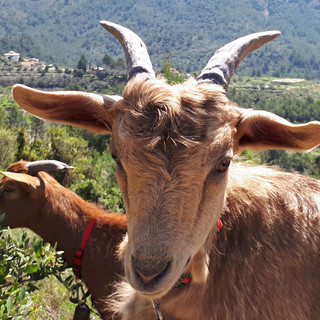
- Jan 4
- 4 min read
And Why the Costa Blanca Is the Right Place for It
Ecotourism is often used as a label, but far less often understood in practice. At Euro Goat Trekkers, based in the mountains of the Costa Blanca in Spain, we believe ecotourism must be more than simply spending time outdoors. It should actively care for the landscape, respect local culture, and help people understand the natural places they visit.

According to The International Ecotourism Society (TIES),
ecotourism is defined as “responsible travel to natural areas that conserves the environment, sustains the well-being of local people, and involves interpretation and education.”
This definition shapes our approach to goat trekking — a low-impact, educational walking experience that fits naturally into the mountain environment of the Costa Blanca.
In a region shaped for centuries by pastoral routes and mountain agriculture, goat trekking is not an imported idea but a continuation of a living relationship between people, animals, and land. Rather than offering tourism in nature, we practice tourism with nature — working alongside animals, landscapes, and local knowledge to create experiences that are both meaningful and sustainable.

Ecotourism Is Local by Nature
There is no single model for ecotourism. What works in one landscape may be damaging in another.
This is why sustainable tourism frameworks

— such as those promoted by EUROPARC Federation — emphasise the importance of local circumstances, local knowledge, and respect for regional ecosystems.
The mountains of the Costa Blanca have their own rhythms, histories, and pressures. Responsible tourism here must work with those realities, not against them.
Goat trekking, when done properly, fits naturally into this landscape.

Why Walking with Goats Is Low Impact
Goats are mountain animals by evolution. They are light on their feet, sure-footed on rocky terrain, and well adapted to dry Mediterranean conditions.
A small pack-goat string — typically fewer than ten animals — has very little physical impact on mountain paths when compared with many other outdoor activities. Their hooves do not churn soil in the way heavy footwear or large groups can, and their movement follows natural contours of the land.
This makes goat trekking a genuinely low-impact form of access to natural areas.

Goats and the Landscape: A Living Relationship
While on the move, goats graze intermittently. This light, selective grazing can help:
discourage the spread of invasive or noxious weeds
support the regeneration of native plant species
maintain open landscapes that reduce fire risk
Goats are also water-efficient animals, an important consideration in a region where water is precious.
Unlike dogs, goats are not predators. Their presence is far less likely to disturb wildlife, allowing treks to pass quietly through sensitive areas with minimal stress to other species.
Cultural Heritage Matters Too
Goats are not an exotic import to Spain — they are part of its living heritage.
For centuries, livestock routes have crossed the Valencian landscape. Today, the Valencian Community maintains a network of more than 14,000 kilometres of historic livestock trails, which are now recognised as:
ecological corridors
routes for biodiversity and genetic exchange
an important environmental asset
These routes are protected under Valencian law and form part of the cultural memory of the land.
The sound of bells, the sight of goats moving through the mountains — these are not disruptions. For many people, they are deeply familiar and welcoming, reconnecting modern life with older, more sustainable ways of living with nature.

Education Is Central to Ecotourism
True ecotourism always involves learning.
Our guided treks are led by people with a comprehensive knowledge of:
local flora and fauna
cultural and agricultural history
current conservation challenges
This shared knowledge turns a walk into an experience of interpretation, helping visitors understand why the landscape looks the way it does — and what is needed to protect it.
Awareness often leads to care. Care can lead to future volunteers, advocates, or supporters of conservation efforts in the region.

Reducing the Need to Travel Further
Goat trekking in the Costa Blanca is sometimes described as “exotic,” yet it is within easy reach of many towns and cities.
Providing meaningful experiences close to home reduces the need for long-distance travel — and with it, the carbon footprint associated with tourism. Responsible tourism does not always mean going further; sometimes it means going deeper into the places we already live near.
Access, Inclusion, and Young People
Walking with pack goats can also make natural spaces more accessible.
The goats help carry equipment and supplies, allowing people who might otherwise struggle to experience protected areas safely and comfortably. This makes goat trekking suitable for:
families
schools
student groups
young people encountering nature for the first time
Learning through a shared, enjoyable activity is often far more effective than learning through instruction alone.

Why This Matters Now
In his message for World Tourism Day, António Guterres, Secretary-General of the United Nations, stated:
“There is no time to waste. Let us rethink and reinvent tourism and together, deliver a more sustainable, prosperous and resilient future for all.”

We agree.
Goat trekking, when practised with care, knowledge, and respect, is not a novelty. It is a practical response to the need for tourism that supports landscapes rather than consumes them.
This is why we do what we do — and why we believe goat trekking has a meaningful place in the future of ecotourism in Spain.

Comments