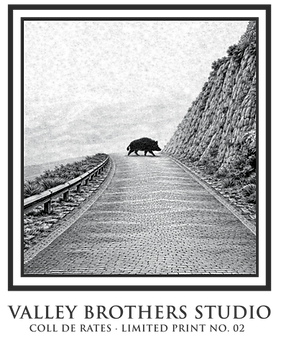
Coll de Rates ·
El camino, el paso, la subida
El tramo del Coll de Rates entre Parcent y la cima no constituye toda la ruta, ni la única vía de acceso a la montaña. Sin embargo, es el paso que recorremos repetidamente: el tramo al que volvemos con más frecuencia y el que poco a poco nos ha ido revelando su carácter.
Situado en la Costa Blanca, en España, este tramo de la carretera del Coll de Rates conecta Parcent con la cumbre a través de calizas, nubes y un paso estrecho.
Éste no es un relato de desempeño ni de técnica.
Es un intento de describir un lugar que se resiste a ser reducido a cualquiera de los dos.

El camino que conocemos
El paso hacia el Coll de Rates
El ascenso desde Parcent hacia la cumbre comienza de forma tranquila. La carretera no se anuncia.
Se curva, se estrecha, vuelve a abrirse y empieza a elevarse de una manera que casi parece conversacional — como si hiciera una pregunta en lugar de imponer una exigencia.
Aunque nuestra finca se encuentra más allá de la cumbre, este tramo de carretera forma parte de nuestro movimiento diario por el valle. Lo recorremos una y otra vez, con luces, vientos y climas cambiantes, regresando a las mismas curvas hasta que la familiaridad deja paso a la atención.
No es la subida completa al Coll de Rates, ni pretende serlo.
Este paso se mantiene aparte — un umbral más que un destino.
Con el tiempo se hace evidente que la carretera no es simplemente un medio para ascender. Es un lugar donde el ritmo se ralentiza, los sentidos se agudizan y la anticipación empieza a pesar más que la certeza.
Antes de que existiera la carretera
Mucho antes de que la carretera de montaña se abriera paso en la piedra caliza, este paso ya estaba en uso.
El Camino de la Pansa — hoy señalado como PR-CV 425 — atravesaba este mismo terreno. Los agricultores recorrían este camino a pie o con mulas, llevando su cosecha de pasas hasta Parcent para venderla y regresando después con el dinero que hubieran podido ganar.
El movimiento aquí era lento, medido y deliberado.
El esfuerzo no era algo que hubiera que optimizar, sino simplemente soportar.
La economía de este camino era la de la repetición y la paciencia — huellas marcadas en la roca, cargas equilibradas con cuidado, progreso logrado con el tiempo más que con la distancia. La subida no era un desafío que conquistar, sino una condición que aceptar.
Esta historia importa. Sitúa la carretera moderna del Coll de Rates dentro de un ritmo mucho más antiguo de trabajo, riesgo y regreso.
El estrechamiento
Justo antes de la cumbre, el paso se estrecha.
Las historias locales hablan de bandoleros que esperaban aquí — ocultos donde el camino se hacía más angosto y escapar era difícil. Los agricultores que regresaban del mercado reducían el paso, dudaban y escuchaban. El dinero cambiaba de manos no tanto por violencia como por inevitabilidad.
El nombre Coll de Rates pertenece a ese momento.
No describe una forma, sino una situación.
Un cuello de botella.
Un lugar de pausa.
Aquí el miedo no era teatral. Era práctico. El reconocimiento de que avanzar tenía consecuencias.
Mucho antes de las bicicletas, este era un lugar donde el progreso hacía una pregunta — y no todos respondían de la misma manera.
Nube, luz y desaparición
Hay días en que la cumbre se ve claramente desde muy abajo — limpia, pálida, recortada con nitidez contra el cielo.
Y hay días en que simplemente no está.
La gente del lugar describe este fenómeno como la panza de burro — una capa densa de nubes que se asienta baja sobre la montaña, suavizando los contornos y borrando la distancia. Desde abajo, la carretera parece ascender directamente hacia ella, como si la cumbre hubiera desaparecido.
La luz se comporta de forma distinta aquí. Se aplana, luego se fragmenta. Las sombras se disuelven. Los sonidos se amortiguan. La carretera pierde definición y se vuelve provisional — una línea clara que avanza sin revelar hacia dónde conduce.
En estos días, el Coll de Rates parece suspendido más que elevado. El progreso se mide menos por la vista que por la atención. El ascenso no siempre recompensa el esfuerzo con claridad.
El lugar no se explica.
Simplemente permite ser encontrado — o no.
Después de la cumbre
Más allá del estrechamiento, el paso se abre.
La respiración se profundiza. Los hombros se relajan. La cumbre en sí es transitoria. Lo importante es la amplitud que viene después.
Algunos ciclistas continúan hacia Altea. Otros se giran y descienden de nuevo hacia Parcent por las mismas curvas que momentos antes exigían resistencia.
De cualquier forma, el descenso cambia la percepción.
El valle parece distinto, aunque nada se haya movido. Lo que se ha soportado empieza a dar forma a lo que se ve.
Vivir junto a un paso
No somos propietarios de esta carretera.
Nos encontramos con ella repetidamente como parte del movimiento cotidiano por el valle. Las cabras la cruzan sin ceremonia. El viento la transforma. Las tormentas la devuelven a la piedra caliza y a la sombra.
La familiaridad no hace que el paso sea más pequeño.
Visto suficientes veces, la carretera revela sus patrones sin explicarlos. Los ciclistas llegan con distintas intenciones y se marchan cambiados, aunque no siempre lo sepan.
El paso sobrevive a cada ascenso.
Respuesta del estudio
Coll de Rates · Cuatro actos es una respuesta de estudio a este paso.
Estas obras no son recuerdos ni ropa de ciclismo. Son un intento de sostener el peso, la resistencia y la belleza silenciosa de un lugar encontrado repetidamente con el paso del tiempo.
Cada imagen corresponde a un movimiento del ascenso, representado en monocromo para preservar la profundidad y la atmósfera. Las composiciones son deliberadamente sobrias, permitiendo que el espacio negativo tenga tanto significado como la forma.
Impresas como ediciones limitadas de estudio y ofrecidas exclusivamente en prendas de algodón orgánico blanco, las obras se leen como objetos artísticos más que como gráficos.
La carretera sigue siendo lo que es.
El paso continúa planteando sus preguntas.
Estas obras no intentan responderlas —
simplemente marcan que fueron encontradas.
Los cuatro actos
Con el tiempo, este pasaje se resuelve por sí solo.
No mediante el análisis, ni solo mediante la repetición, sino mediante la inmersión. Recorriendo el mismo tramo una y otra vez —a pie, en vehículo, con calor, viento y nubes— surge una estructura que se siente menos como interpretación y más como reconocimiento.
Esta sección de Coll de Rates se desarrolla en cuatro movimientos.
No son etapas universales del ciclismo ni metáforas aplicadas a posteriori. Pertenecen específicamente a este ascenso, a este estrechamiento, a este acercamiento a la cima.

Acto II
Resistencia
El gradiente se impone. El progreso se vuelve rítmico, deliberado, sostenido, hasta que se interrumpe. Surge la resistencia. Ya no se da por sentado el avance.
Hay un punto en este ascenso donde el progreso deja de sentirse continuo.
El camino no se empina de repente. Al contrario, se rechaza silenciosamente el avance.
Éste es el muro que contiene cada pasaje.
Aquí, la resistencia no es peligro, sino obstrucción. Una antigua presencia se impone, impasible ante el esfuerzo, indiferente a la intención. Hoy, esta resistencia suele estar encarnada por el jabalí.
El jabalí no amenaza.